Demand in the age of self-exploitation: between wellbeing and the performance trap
Reading Byung-Chul Han’s The Burnout Society, I found myself thinking about the achievement society and everything it implies:
- Chronic fatigue
- Stress
- Depression
- Anxiety
- Burnout
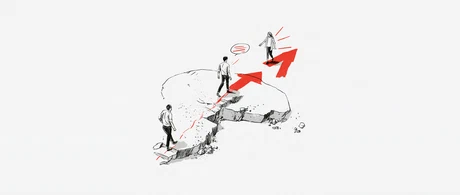
Han calls it “neural violence”, because the damage is not physical or visible, but mental. He puts forward a powerful idea: that freedom and excessive self-demand in today’s society do not liberate us — they can lead us to a state of constant exhaustion.
When I stop to reflect on it, these concepts resonate with me because at some point I found myself caught in that logic of permanent demand, where one believes she is freely choosing, but is in reality responding to an internalised pressure to do more, be more, achieve more.
And perhaps that is one of the great traps: no one needs to impose anything from the outside anymore — we demand it of ourselves. We turn productivity into personal worth and rest into guilt.
Wellness as a new obligation
I also find the reflection of Cederstrom and Spicer in their work The Wellness Syndrome very interesting. I am sharing a review by Jules Evans that summarises their argument very well.
The article presents The Wellness Syndrome as a critique of how contemporary culture turns “wellbeing” into a moral obligation, where people feel guilty if they do not optimise their health, productivity, and happiness.
It argues that this approach individualises social problems (stress, precariousness, inequality) and reinterprets them as personal failures of self-care or attitude.
It also notes that the wellness industry reinforces that logic of constant self-improvement rather than genuinely relieving it.
Taken together, the book argues that this ideology generates more anxiety and self-demand instead of real wellbeing or freedom — which aligns well with the idea of a “dictatorship of positivism” proposed by Byung-Chul Han in his essays.
Liquid modernity and individual responsibility
In Liquid Modernity, Zygmunt Bauman describes a society in which stable structures dissolve, leaving the individual in a context of constant uncertainty, forced to manage themselves without solid frameworks of support.
In this scenario, contemporary wellness culture can be understood as an extension of that same logic: what were once structural problems (precariousness, stress, instability) are reinterpreted as individual responsibilities of self-care, attitude, or emotional performance.
How to break out of the spiral
The question that arises for me now is not only how to recognise this spiral, but how to leave it without turning the “exit” into a new form of demand.
Perhaps it starts by questioning deeply ingrained beliefs:
- that stopping is wasting time
- that setting limits means lack of commitment
- that our worth depends on performance
Perhaps the point is not to optimise self-demand, but to transform our relationship with time, limits, and rest. To reclaim spaces of pause, presence, and even emptiness.
And perhaps the underlying question is not how to be more efficient, but how to stop measuring ourselves exclusively by performance.
Did this resonate?
Let's talk30 minutes · No commitment