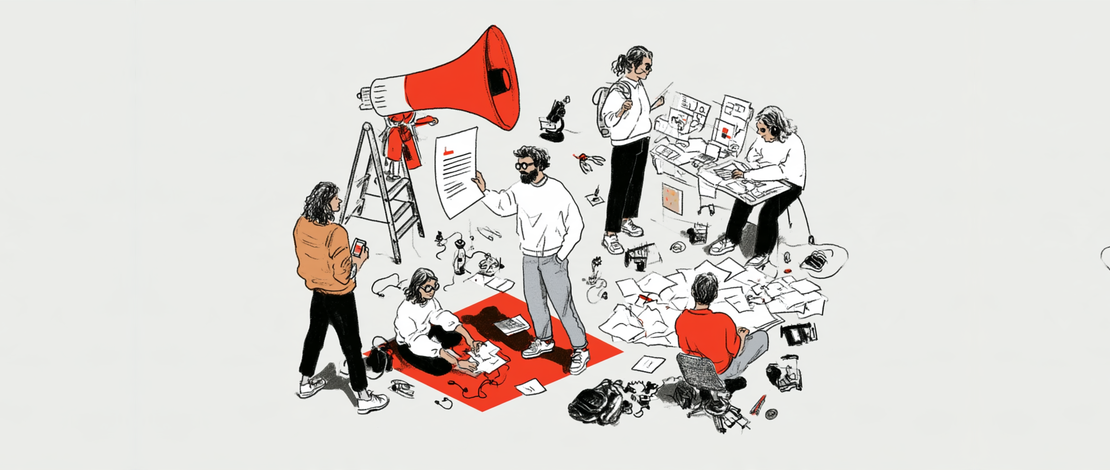
Culture is not declared, it is demonstrated
What we mean by a good company culture
We often find ourselves in forums, articles and hallway conversations where the concept of “company culture” is repeated with such a broad scope that it turns this precious asset into a persistent, antiseptic echo of the current ecosystem. People talk about culture the way they talk about the weather: everyone has something to say, few stop to define it, and almost nobody turns it into something actionable.
So let’s start with the basics: what do we mean by culture?
From two definitions to an idea of our own
The dictionary offers two definitions that, combined, give us a solid foundation. On the one hand, culture is the body of knowledge that allows someone to develop their critical judgement. On the other, it is the set of ways of life, customs, knowledge and degree of artistic, scientific and industrial development of an era or social group.
Influenced by both meanings, we could say that organisational culture is the set of beliefs, values, habits, traditions, attitudes and shared experiences of an organisation. It is not a poster on the wall or a list of values on the corporate website: it is what actually happens when nobody is watching.
A system of systems
Here lies the first real challenge. We know that an organisation is made up of people, and that each person is, in themselves, a belief system built over an entire lifetime. A company’s culture, then, is a system of systems, a living network of individual meanings that intersect, influence each other and — when it works well — converge.
And this raises the uncomfortable question: how do we condense something so vast and so alive into a simple, ready-made manifesto? How do we make so many individual lines of action converge into a single shared philosophy without falling into empty simplification?
The mirage of the guru
This is where a very present figure appears these days: the culture guru, the one who promises the single formula, the universal framework, the five words that will transform your organisation. It is a trompe-l’œil: a painting that looks three-dimensional but that, up close, is flat.
Escaping this mirage does not mean rejecting expert knowledge or methodology. It means being wary of any answer that arrives before the question. No culture is copied and pasted from a book, a TED talk or the latest success story from a big tech company. It is built, questioned and adjusted from within, with the specific people who inhabit it.
Purpose matters more than definition
More important than precisely defining what a culture is, is understanding what we want it for. Because the underlying question is not “what culture do we have?”, but “why should an organisation set out to deliberately build a good culture?”. And the answer, if we are honest, has to do with creating a healthy, efficient and productive ecosystem. Not culture for aesthetics. Culture for results.
A good culture is not an end in itself: it is the invisible infrastructure that makes it possible for talent to stay, for decisions to be made faster, for conflicts to be resolved without destroying trust, and for the business to work even when things get difficult.
From philosophy to daily practice
And this is where the reflection stops being abstract. For a culture to be efficient, understanding the purpose is not enough: it has to be genuinely shared, and acted upon day after day. It is not a launch with confetti. It is an exercise in sustained coherence, made of small, repeated decisions that add collective effort over time.
Culture is not declared: it is demonstrated. It is demonstrated in how feedback is given, in which behaviours are rewarded and which are tolerated, in how people lead in difficult moments, not only in comfortable ones. That is the real work, and it is everyday work, not the work of an annual offsite.
In short
A good company culture is not a slogan or a borrowed formula. It is a living system of shared beliefs that, properly cared for, becomes the foundation of a healthy, efficient and human business. It is not imposed from above or copied from outside: it is built from purpose, sustained through daily coherence, and measured in results, not in intentions.
The question truly worth asking is not what culture we have today, but what culture we are building — because every decision either builds or erodes your culture. There is no middle ground.
Did this resonate?
Let's talk30 minutes · No commitment